 Big Joe Williams may have been the most cantankerous human being who ever walked the earth with guitar in hand. At the same time, he was an incredible blues musician: a gifted songwriter, a powerhouse vocalist, and an exceptional idiosyncratic guitarist. Despite his deserved reputation as a fighter (documented in Michael Bloomfield's bizarre booklet Me and Big Joe), artists who knew him well treated him as a respected elder statesman. Even so, they may not have chosen to play with him, because -- as with other older Delta artists -- if you played with him you played by his rules.
As protégé David "Honeyboy" Edwards described him, Williams in his early Delta days was a walking musician who played work camps, jukes, store porches, streets, and alleys from New Orleans to Chicago. He recorded through five decades for Vocalion, Okeh, Paramount, Bluebird, Prestige, Delmark, and many others. As a youngster, I met him in Delmark owner Bob Koester's store, the Jazz Record Mart. At the time, Big Joe was living there when not on his constant travels. According to Charlie Musselwhite, he and Big Joe kicked off the blues revival in Chicago in the '60s.
When I saw him playing at Mike Bloomfield's "blues night" at the Fickle Pickle, Williams was playing an electric nine-string guitar through a small ramshackle amp with a pie plate nailed to it and a beer can dangling against that. When he played, everything rattled but Big Joe himself. The total effect of this incredible apparatus produced the most buzzing, sizzling, African-sounding music I have ever heard.
Anyone who wants to learn Delta blues must one day come to grips with the idea that the guitar is a drum as well as a melody-producing instrument. A continuous, African-derived musical tradition emphasizing percussive techniques on stringed instruments from the banjo to the guitar can be heard in the music of Delta stalwarts Charley Patton, Fred McDowell, and Bukka White. Each employed decidedly percussive techniques, beating on his box, knocking on the neck, snapping the strings, or adding buzzing or sizzling effects to augment the instrument's percussive potential. However, Big Joe Williams, more than any other major recording artist, embodied the concept of guitar-as-drum, bashing out an incredible series of riffs on his G-tuned nine-string for over 60 years.
 trax:
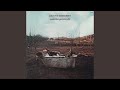
01. 49 Highway Blues 02. Little Leg Woman 03. Providence Help The Poor People 04. Stepfather Blues 05. Baby Please Don't Go 06. Stack O' Dollars 07. Wild Cow Blues 08. I Know You Gonna Miss Me 09. Brother James 10. Rootin' Ground Hog 11. I Won't Be In Hard Luck No More 12. Meet Me Around The Corner 13. Crawlin' King Snake 14. I'm Getting Wild About Her 15. Peach Orchard Mama
...served by Toxxy...








5 comments:
Big Joe Williams "Meet Me Around The Corner"
...served by Toxxy...
gitit! Password for all files = TXX
Download links:
M = Mp3 @256 CBR
F = FLAC (tracks)
A = Artwork in JPG
Partial artwork in JPG are included inside the rars for both Mp3 and FLAC.
If you, the downloader/guest at TWILIGHTZONE, care for the full set of artwork, then you can download the scans in JPG.
TXX-50-M.rar
http://www58.zippyshare.com/v/14432819/file.html
TXX-50-F.rar
http://www58.zippyshare.com/v/65958902/file.html
TXX-50-A.rar
http://www58.zippyshare.com/v/52422675/file.html
BONUS:
Billie Joe Armstong + Norah Jones - Foreverly (2013)
http://www11.zippyshare.com/v/71650358/file.html
Entering a long line of artists who've drawn inspiration from the Everly Brothers, Billie Joe Armstrong and Norah Jones serve up a unique tribute with Foreverly. Unlike many others -- including Will Oldham and Dawn McCarthy, who released a trippy Everlys covers album earlier in 2013 -- the duo doesn't dig deep into the brothers' catalog but rather concentrates on a single LP, the 1958 Cadence classic Songs Our Daddy Taught Us. Just a year into their career, the Everlys took the unusual step of abandoning rock & roll for traditional folk and country tunes they learned from their guitarist father Ike. Songs Our Daddy Taught Us was one of rock's first roots albums -- the Everlys returned to the concept and use "Roots" as a title a decade later -- and it's a bit of an anomaly in their catalog, a spare, sweet showcase for their close harmonies where the brothers are backed by nothing more than their own guitars. Foreverly, an album that contains all 12 of the songs from Songs Our Daddy Taught Us but not precisely in the same sequence, may recall Jones' country cabaret act the Little Willies yet it's something of a departure for Green Day lead singer Armstrong, who has often shown a love for rock & roll's past (most notably on the '60s garage rock raver Foxboro Hot Tubs) but has never quite spent much time in the '50s, not even with the Stray Cat strut of "Hitchin' a Ride." Even though the songs here date from much earlier, Foreverly is grounded in that decade, with Armstrong and Jones not only patterning their two-part harmonies after the Everly Brothers but fleshing out the arrangements by incorporating other sounds from the '50s: "Long Time Gone" and "Silver Haired Daddy of Mine" swing to subdued Johnny Cash rhythms, "Oh So Many Years" gets a slight Sun rockabilly makeover, "Kentucky" recalls the swaying slow dance specialties of Patsy Cline. Such variations from the text emphasize that Armstrong and Jones aren't re-creating Songs Our Daddy Taught Us; they're singing its songs, paying respect without being overly faithful. Their approach is not dissimilar to that of Don and Phil in 1958; the brothers didn't scrupulously re-create the sound of the past, they sang the songs in a way that was true to them, which is precisely what Billie Joe and Norah do here. They're a good match. Jones' suppleness sands down Armstrong's ragged voice, he gives her grit while she lends him grace, and these qualities are evident throughout this lovely little gem of an album. (Stephen Thomas Erlewine, Allmusic)
Big Joe Williams was certainly one of the Giant of the Delta blues and his massive recorded output contains very very few bad tracks. He was a hard to deal with character (I relate some of my own experience with him in my novel A long blues in A minor) but a great bluesman who should be treated with more respect than with this poorly made CD assembling sides with no rhyme nor reason and even featuring at the back of the CD a photo of jazz singer Joe Williams from Count Basie fame!
Many tanx! Big Joe Turner, I can't wait to hear these.
Thanks
Post a Comment